The synthesis and study of new biologically
active molecules is a current scientific topic directly related to the
development of 'eco-friendly' molecular sensors and is an area of analysis that
receives considerable attention due to its direct ability to detect heavy metal
ions in various objects. Environmental
contamination, for example with heavy metals, reflects directly and indirectly
on human health, such as an increase in genetic mutations, cancer, cardiovascular
and occupational diseases, poisoning, dermatoses, reduced immunity and related
diseases.
To that end, strict preventive legislation is
being implemented for all potential types of metal contamination and their
forms, ensuring essential coherence at the European and global levels. This
necessitates the creation of a tight set of laws and controls over the
chemicals used, as well as their commercial distribution and strict control
over their emissions into the environment, especially in water areas. This
makes the discovery of efficient molecular sensors for the detection and
quantification of metal ions an emerging field in chemistry and technology, due
to their simplicity, low cost, sensitive ion-induced spectrometric and
electrochemical changes, easy monitoring of operating conditions, and real-time
analysis.
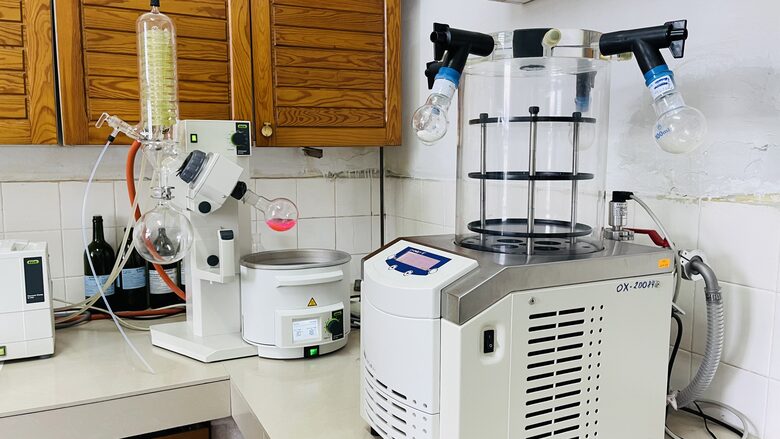
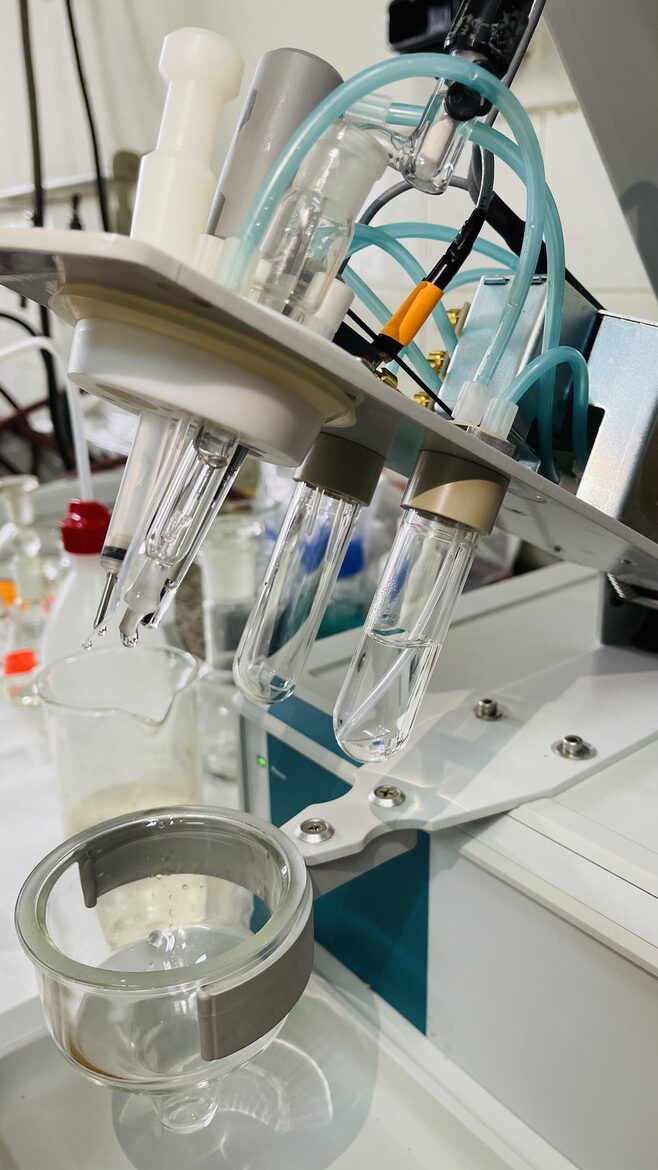
The creation of so-called "dual" chemosensors, which have benefits over chemosensors for determining a single analyte, has piqued the interest of researchers in recent years. The invention of a dual metal ion sensor can save time and cost because it can detect two different metal ions, eliminating the need to prepare two separate sensors to detect each analyte independently. A chemosensor can sometimes "sense" two different types of analytes under various conditions, such as different excitation or emission wavelengths, changes in solvent, pH, and so on. This means that, for example, using such chemosensors, it is possible to identify two metal ions in a living cell by simply adjusting the excitation wavelength or monitoring the emission wavelength. In this regard, peptides and their derivatives would be ideal for complexation and the construction of "dual" chemosensors since they have various donor atoms in the peptide backbone and amino acid side chains. The complex compounds created can exist in a variety of conformations depending on the pH of the environment and the concentrations of the peptide and metal ions.
Because of their higher biocompatibility and solubility compared to pure parent compounds, low toxicity, high affinity and specific interactions with the target ion, and stability compared to peptides in aqueous solutions, hybrid peptide molecules, such as peptides containing chromophore units, would be very valuable as chemosensors. Furthermore, the desired amino acid sequences that comprise a specific peptide molecule can be easily manufactured by modifying the amino acid sequences using the improved solid-phase peptide synthesis (SPPS) process and easily be conjugated with various chromophores.
Given the growing importance of peptide derivatives and their complexes with transition metal ions, we aim to:
1) synthesize, purify, and structurally characterize preparative amounts of new hybrid oligopeptide derivatives with different amino acid sequences on the one hand and a different number of amino acids (from 3 to 10) conjugated with chromophoric groups (rhodamines, coumarins, naphthalimides, and other heterocyclic systems), which will be tested as "dual" chemosensors for the detection and determination of metal ions;
2) investigate the redox mechanism of action of new hybrid peptide compounds in different electrolyte medium by applying voltammetric and potentiometric techniques to establish acid-base constants;
3) investigate the complexation properties of peptide derivatives conjugated with chromophore groups with metal ions such as Cu (II), Co (II), Ni (II), Zn (II), etc. in media with different pH by electrochemical and spectral approaches;
4) investigate the possibility of developing spectral/electrochemical methods for the detection and determination of combinations of metal ions in real samples (surface and wastewater; biological fluids, etc.) and form prescriptions for procedures for creating "dual" sensors for effective application.
The complex-forming capabilities of Cu(II), Co(II)-, Ni(II)-, Zn(II)-, and other ions are expected to be examined for the first time with newly synthesized peptide derivatives as a result of the completion of the tasks. These scientific findings will help to expand the database of coordination chemistry on a national and worldwide scale. For the first time, peptide-based dual chemosensor molecules will be produced and used to generate novel analytical methodologies and procedures for metal ion detection and determination in the real conditions.